
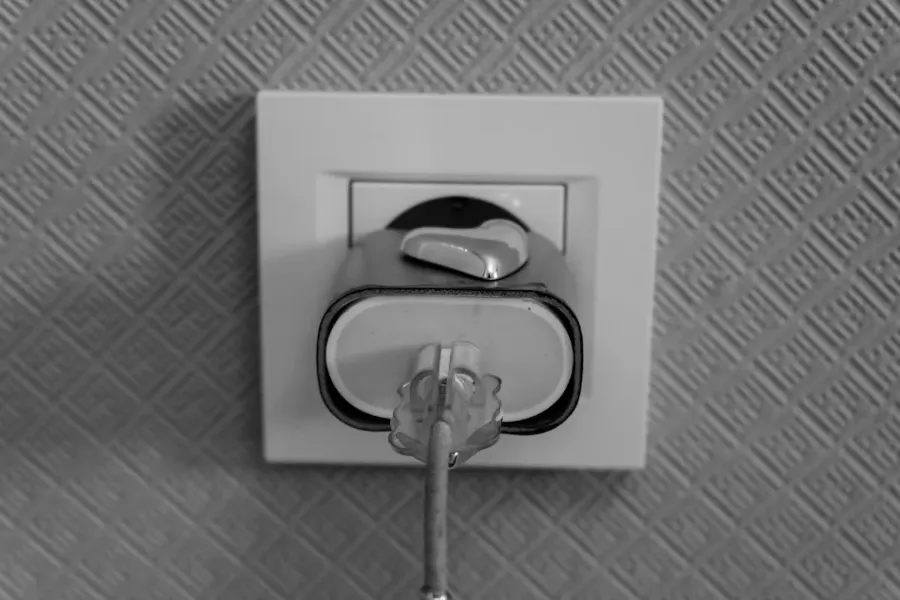
Nearly every failed outlet we open has been failing slowly. The connection loosens, resistance rises, the joint heats a little every time load passes through it, and the plastic around it degrades. Somewhere in that sequence is a window of weeks where the whole thing is obvious to anyone who checks.
What to do, room by room
Walk the house with everything running normally. At each outlet and switch, put the back of your hand flat on the plate — anything warmer than the wall around it goes on the list. Look for discoloration, particularly a faint brown halo around an outlet hole, and for plates that have gone glossy or slightly misshapen. Then smell: hot plastic and ozone are both unmistakable once you’ve met them.
The high-risk spots
Check the outlets doing the hardest work first — behind the fridge, the one the kettle and toaster share, wherever a heater or dehumidifier lives, the garage freezer, and anything an extension cord has occupied for more than a year. Loose-fitting outlets, where a plug droops or falls out, are worn contacts and belong on the list even when they’re cool.
What the list means
One warm outlet is a repair. Several on the same circuit is a circuit problem. Anything discolored or smelling should be switched off at the breaker until someone looks at it. None of this is expensive to fix at the stage you can find it this way, which is rather the point.